Panchakarma Aftercare: Diet, Routine and What to Avoid After a Retreat
What to eat, avoid and watch for after Panchakarma so the retreat does not end the moment you travel home.
Aftercare Protects the Reset
Panchakarma aftercare is a useful topic only when it is explained with context, screening and realistic expectations.
Panchakarma aftercare is where many people either consolidate the benefit of a retreat or undo it within a few days. Travel, heavy meals, alcohol, poor sleep and immediate work pressure can be too much too soon.
The most useful aftercare plan is simple: rebuild digestion gradually, keep routine steady, avoid extremes and stay alert to warning signs. It should feel supportive, not restrictive for the sake of restriction.
At Yan Cure, aftercare should be explained before departure so guests know what to do when they are no longer inside the retreat environment.
For program context, see Yan Cure's related retreat or therapy page and the broader Ayurvedic treatments in Rishikesh page.
SEO intent: This article targets Panchakarma aftercare and related informational searches such as Panchakarma diet after treatment, after Panchakarma routine, Panchakarma recovery, Ayurveda retreat aftercare without competing with the booking page.
How the Session or Plan Usually Works
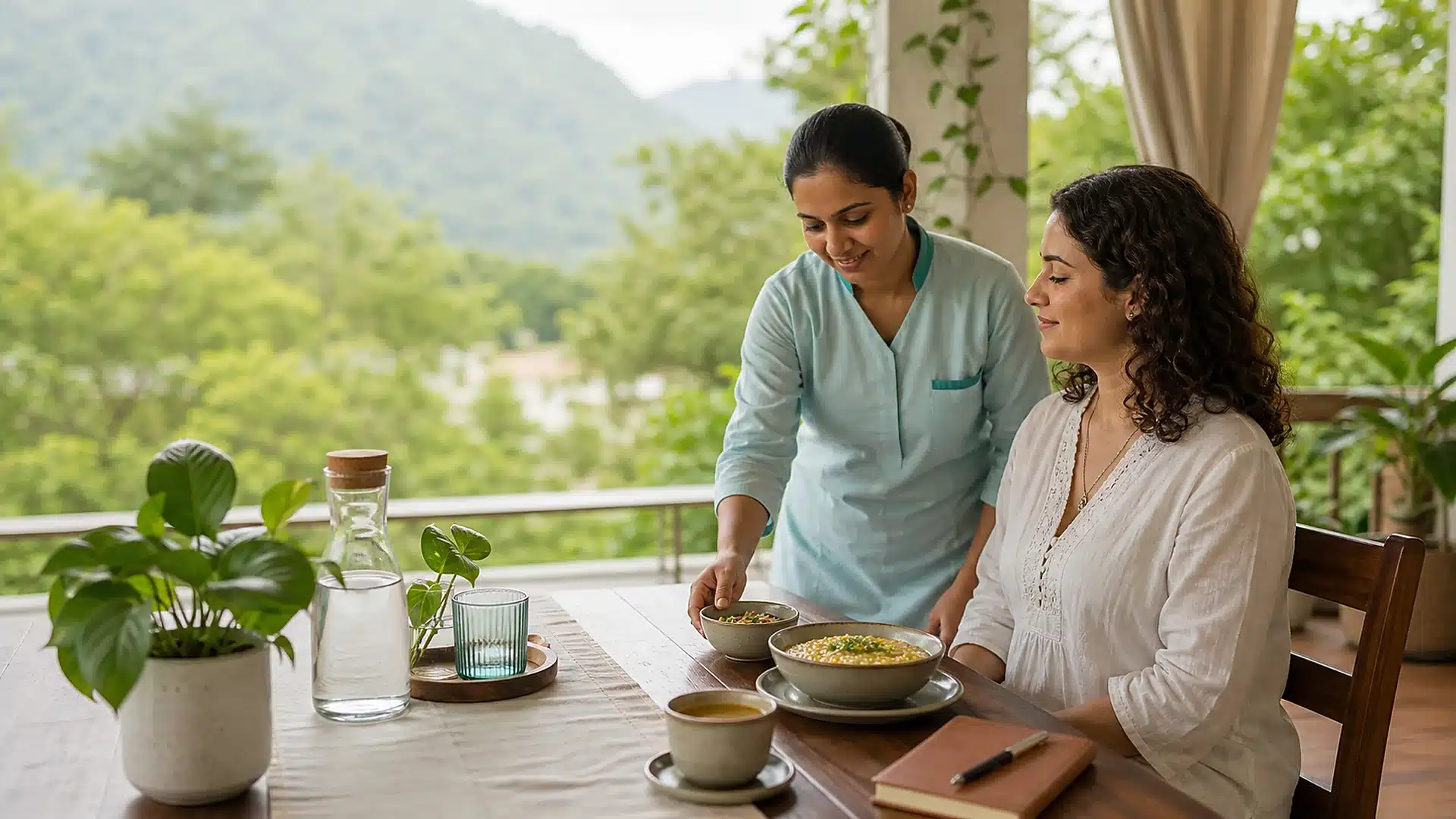
Aftercare usually begins with warm, freshly cooked, easy-to-digest food. Many people are guided toward khichdi, soups, cooked vegetables, warm water and smaller portions before returning to heavier foods.
The exact diet depends on the therapies used, digestive strength, appetite and medical history. Someone with diabetes, kidney disease, pregnancy, eating disorder history or significant weakness needs individual advice.
Aftercare also includes emotional pacing. A quiet retreat can make the nervous system feel calmer, but returning to deadlines and screens too quickly can feel jarring.
Eat warm and simple
Start with cooked meals and avoid overeating immediately after the program.
Travel gently
If possible, avoid an exhausting travel schedule on the same day as intense therapy.
Resume exercise slowly
Begin with walking and gentle stretching before heavy training.
Protect digestion
Avoid alcohol, very oily food, late dinners and random supplements unless cleared.
Follow up
Ask when to call the retreat team and when to seek urgent medical care locally.
Any therapy should be adapted to the person. Stronger is not automatically better, and a guest should be able to pause, decline or ask questions at any point.
What You Can Expect Without Overclaiming
The strongest content for Ayurveda and naturopathy is honest content. Benefits should be explained as possible support, comfort, routine-building or relaxation, not as guaranteed cure language.
A gradual food transition may reduce heaviness, bloating or appetite confusion.
Sleep, meals and movement become easier to continue after leaving the retreat.
Warning signs are easier to notice when aftercare instructions are clear.
Who Should Be Careful or Avoid It?
Before any retreat therapy, tell the practitioner about diagnosed conditions, medicines, allergies, pregnancy status, surgery history and symptoms that have not been medically assessed.
| Situation | What to do |
|---|---|
| Delay or avoid when | Heavy workouts, alcohol, fasting experiments, intense sauna, laxative use, long stressful travel and sudden supplement changes immediately after the program. |
| Tell the practitioner about | Ongoing diarrhea, vomiting, fever, dizziness, weakness, blood sugar fluctuation, unusual pain, palpitations or medication questions. |
| Stop and seek help if | Severe dehydration signs, fainting, chest pain, black stools, persistent vomiting, confusion or worsening abdominal pain. |
What the Research Can and Cannot Say
There is limited high-quality evidence for Panchakarma aftercare protocols as a standalone medical intervention. The practical value is in cautious recovery, not in claiming that toxins are permanently removed.
NCCIH's detox guidance is useful here because it warns against unsafe cleanse claims, severe restriction and dehydration. That is exactly why aftercare should be moderate and supervised.
Useful external reading: NCCIH detoxes and cleanses safety guidance, NCCIH overview of Ayurvedic medicine.
Yan Cure positioning: This article should send motivated readers to the Panchakarma landing page for program details and to the appointment page for suitability questions. For personal guidance, use the appointment page instead of self-prescribing therapies.
FAQs
What is the best food after Panchakarma?
Warm, cooked, simple meals are commonly advised, but the exact plan should be personalized.
Can I travel immediately after Panchakarma?
Short travel may be unavoidable, but avoid overloading the same day after intensive therapies where possible.
When can I exercise again?
Most people should restart gradually with walking or gentle movement before heavy training.
Can I drink coffee after Panchakarma?
Ask your practitioner. Many people are advised to reduce stimulants for a short period after treatment.
How long does aftercare last?
It can range from a few days to a few weeks depending on the program and the person's strength.
Want to Know Whether This Is Suitable for You?
Yan Cure can help you understand whether this therapy belongs in your Ayurveda or naturopathy retreat plan, and when a gentler or different option is wiser.