Abhyanga Massage: Benefits, Oils, Safety and What to Expect
Understand how this traditional warm-oil practice differs from a spa massage, how a professional session is personalized, and when it may not be suitable.
What Abhyanga Massage Actually Is
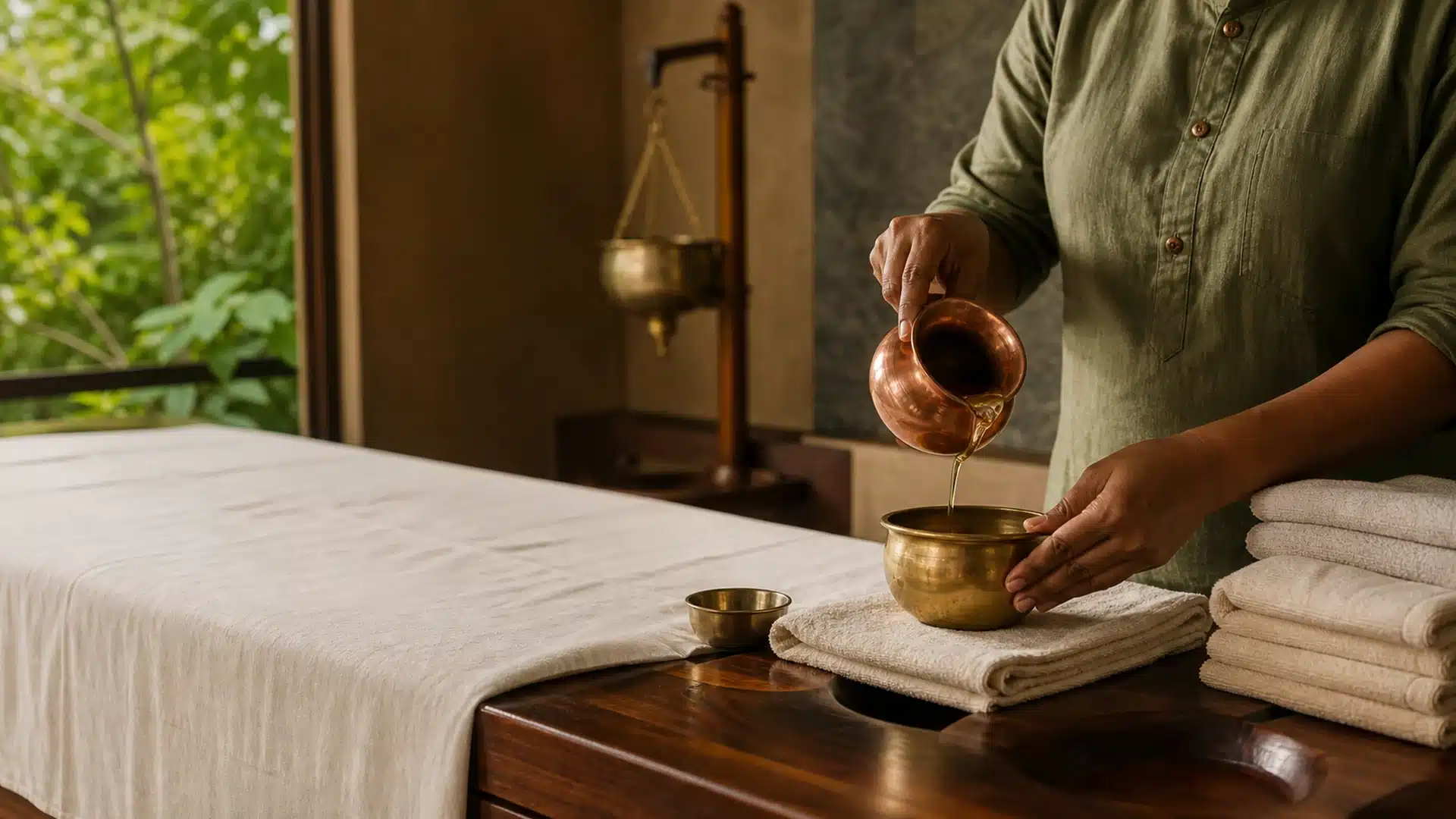
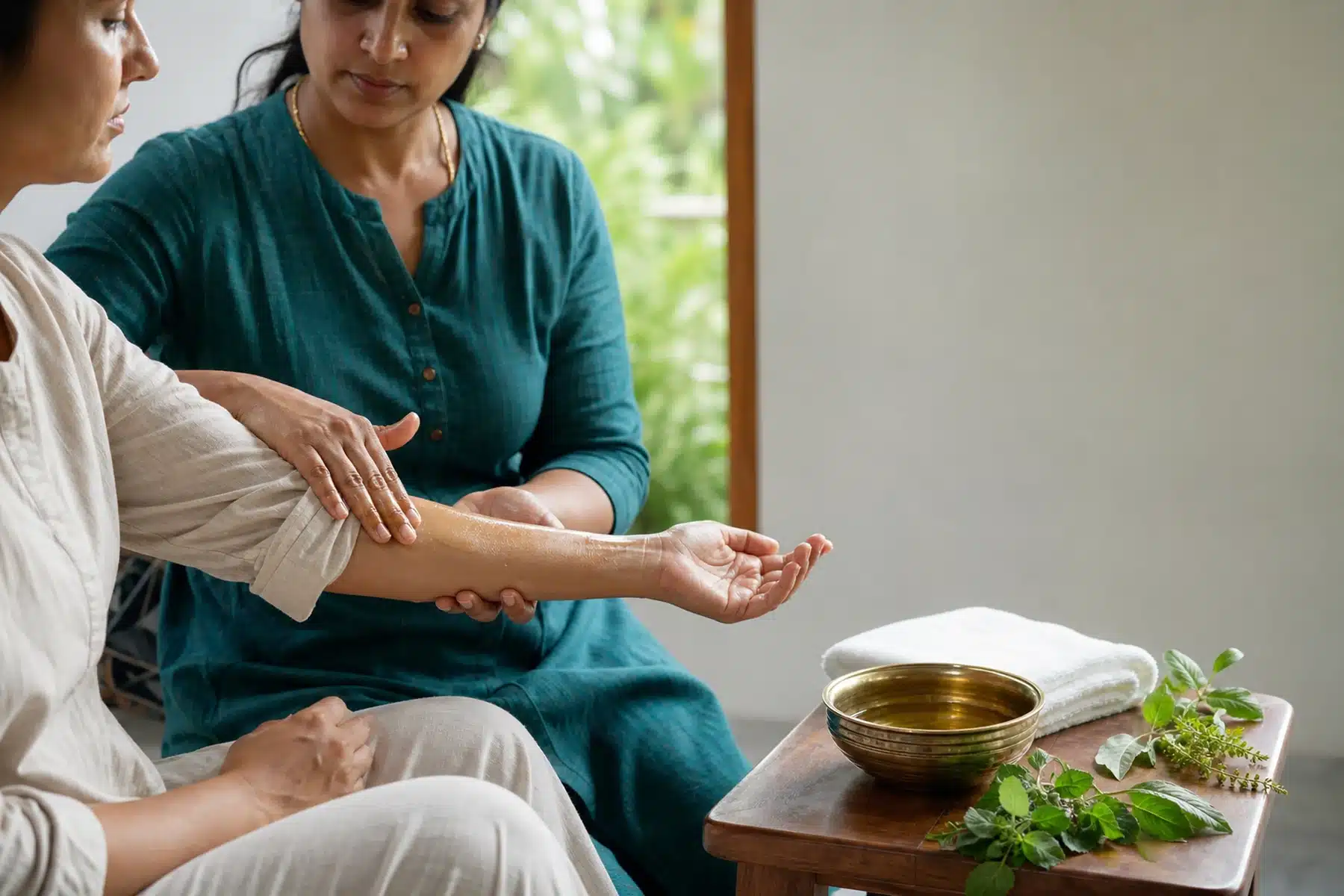
Abhyanga massage is a traditional Ayurvedic practice in which oil is applied to the body using repeated, flowing movements. In a professional setting, the oil, pressure, duration and areas treated should be adjusted to the person rather than selected from a generic dosha chart.
The experience is often warm, rhythmic and unhurried. That may feel deeply restorative, but it is important to keep expectations realistic: Abhyanga is not proven to remove “toxins,” cure disease or replace medical treatment.
At Yan Cure, oil therapies sit within a wider consultation-led approach. They may be considered alongside other traditional Ayurvedic therapies, yoga, food routine and rest according to current health needs.
The useful distinction: Abhyanga is defined by its Ayurvedic context, oil application and rhythmic technique. It is not automatically better than another form of massage; it is a different practice with a different therapeutic tradition.
A Professional Abhyanga Session, Step by Step
A session should begin before the oil touches the skin. The practitioner needs enough context to choose a suitable approach and to identify situations in which massage should be modified or postponed.
Brief assessment
You may be asked about symptoms, injuries, skin sensitivity, medication, pregnancy, sleep and your purpose for booking.
Oil and heat check
The practitioner selects an appropriate oil and confirms that its temperature feels comfortably warm, never hot.
Privacy and draping
Only the area being treated should be uncovered. You can ask about draping, therapist gender and boundaries before starting.
Rhythmic application
Oil is applied with flowing strokes and circular movements around joints. Pressure should remain comfortable.
Rest and clean-up
Some plans allow a short rest before a warm shower. Additional heat therapy is separate and is not suitable for everyone.
A typical session may last about 45 to 75 minutes, but there is no universal duration. Speak up immediately if you feel pain, dizziness, overheating, skin irritation, breathing difficulty or emotional discomfort.
Oil Choice Is a Conversation, Not a Dosha Shortcut
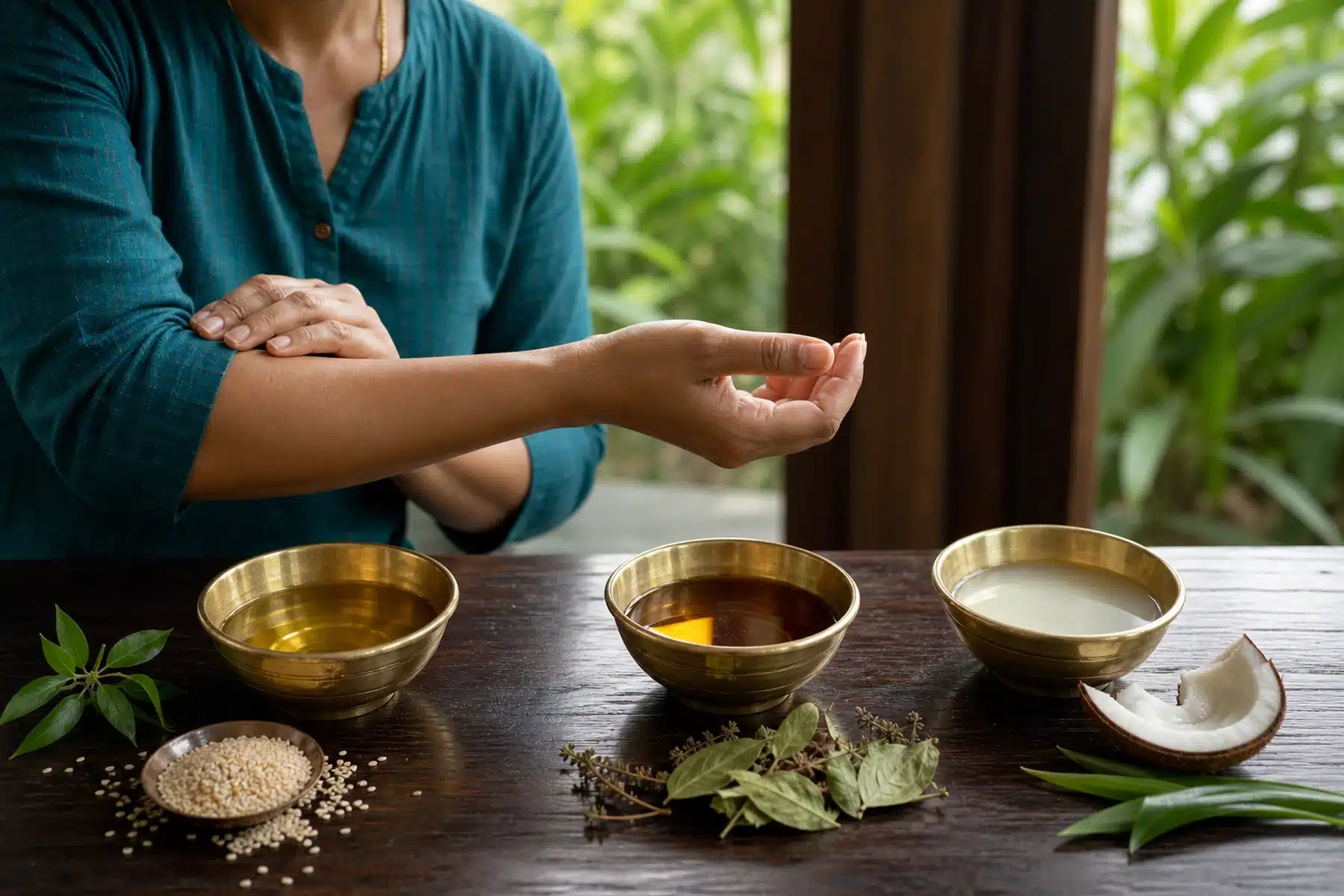
Sesame oil is commonly associated with Abhyanga, while coconut oil and herb-infused preparations may be selected in other contexts. Traditional practitioners may also consider season, climate and Ayurvedic constitution.
Dosha is only one part of a responsible decision. Skin condition, fragrance sensitivity, nut or seed allergy, body temperature, current medication, pregnancy and the purpose of the session may matter more.
- Sesame-based oil: traditionally valued for its warming, substantial quality, but unsuitable for anyone with a sesame allergy.
- Coconut-based oil: lighter and cooling in traditional use, although it may solidify in cooler conditions.
- Herbal oil: should have clear ingredients and a reason for use; “natural” does not guarantee that it will suit sensitive skin.
- Neutral carrier oil: may be a more practical option when fragrance or complex herbal formulations are not appropriate.
A patch test may be sensible for reactive skin. Ask exactly what will be applied and tell the practitioner about previous reactions before the session begins.
Abhyanga Massage Benefits: What Is Reasonable to Expect?
People commonly choose Abhyanga for quiet time, warm oil application, a sense of bodily comfort and temporary relaxation. Oil can reduce friction during massage and leave dry skin feeling softer, provided the product suits the skin.
Research specific to Abhyanga remains limited. A small 2011 pilot study involving 20 healthy adults found lower self-reported stress and heart rate immediately after one session. Because it was small and measured a single treatment, it does not establish long-term effects or prove that Abhyanga treats stress-related disorders.
Evidence for massage more broadly varies by condition. The U.S. National Center for Complementary and Integrative Health describes possible short-term benefits for some pain conditions, while also noting that the strength of evidence is often low.
A calm, structured session that may support short-term relaxation and body awareness.
Temporary comfort, easier unwinding or softer-feeling skin when the technique and oil are suitable.
Detoxifying organs, treating chronic disease, producing weight loss or replacing prescribed healthcare.
When to Delay or Avoid Abhyanga
Massage is generally considered low risk when performed appropriately, but it is not suitable in every situation. The safest decision depends on the condition, the area being treated, the pressure used and the person’s medical context.
| Situation | Practical approach | Why caution matters |
|---|---|---|
| Fever, contagious illness or feeling acutely unwell | Postpone the session until recovered and medically stable. | Rest and appropriate medical assessment take priority. |
| Open wounds, burns, active rash or skin infection | Avoid oil and massage over the affected area; seek clinical advice when needed. | Friction and products may worsen irritation or spread infection. |
| New swelling, severe unexplained pain or suspected blood clot | Do not massage. Obtain urgent medical assessment. | Massage is inappropriate when a clot or acute condition is possible. |
| Recent surgery, fracture or acute injury | Wait for clearance and use only a suitably modified plan. | Healing tissue may be vulnerable to pressure or movement. |
| Pregnancy, anticoagulants, neuropathy, fragile bones or cancer treatment | Ask the relevant healthcare professional and disclose the condition to the therapist. | Position, pressure, heat and product choice may need significant modification. |
The NCCIH reports that serious massage-related harms are rare, but cases involving blood clots, nerve injury and fracture have occurred, particularly with vigorous techniques or increased vulnerability. This is why a proper history and appropriate pressure are essential.
Five Practical Checks Before the Oil Is Applied
Share relevant diagnoses, medication, allergies, recent procedures and current pain.
Avoid arriving immediately after a heavy meal; follow the centre’s timing guidance.
Ask what oil will be used and request a simpler option if your skin is reactive.
Confirm draping, areas to be treated and any areas you want the therapist to avoid.
Wear easy-to-clean clothing because a small amount of oil may remain after bathing.
Simple Aftercare Without a Rigid Ritual
Allow time to sit up slowly, especially if you have been resting for an hour. Floors and footwear may become slippery, so clean the soles of the feet carefully.
A warm shower can remove excess oil. Very hot water and aggressive scrubbing may irritate skin. Hydrate normally, eat according to appetite and avoid treating tiredness or dizziness as a “detox reaction.”
If you develop a persistent rash, swelling, breathing difficulty, severe pain or other concerning symptoms, seek appropriate medical advice. A wellness explanation should never be used to dismiss a possible adverse reaction.
Professional Abhyanga vs Self-Abhyanga
| Point of comparison | Professional session | Self-Abhyanga |
|---|---|---|
| Purpose | A structured treatment experience guided by a trained practitioner. | A brief personal routine, often used for comfort and skin lubrication. |
| Coverage and technique | Can include areas that are difficult to reach, with pressure adjusted during the session. | Usually lighter and limited to safely reachable areas; forceful pressure is unnecessary. |
| Personalization | Should include screening, product selection, consent and modifications. | Requires a simple oil that is known to suit your skin and a safe, non-slip setup. |
| Best avoided | When contraindications are present or screening is inadequate. | Over injured, numb, infected or inflamed areas, or when balance and reach are limited. |
Self-Abhyanga does not need to be a daily full-body routine. A small amount of suitable oil applied gently to the hands, feet or limbs may be more realistic. Stop if the skin becomes irritated or the practice creates a fall risk.
Where Abhyanga Fits in a Rishikesh Retreat
At an Ayurveda retreat, Abhyanga may be one part of a broader daily plan rather than a stand-alone spa booking. Consultation, gentle yoga, suitable meals, rest and other therapies can shape the overall experience.
It may appear during a Panchakarma retreat, but not every guest receives the same sequence. Our guide to what to expect during Panchakarma explains why preparation and recovery are personalized.
Guests seeking a less intensive stay can explore a wellness retreat in Rishikesh. Those primarily focused on rest and routine may also consider Yan Cure’s stress-management retreat.
Choose a retreat because the assessment, practitioner communication, hygiene and overall plan are credible, not because a package promises the same oil treatment or dramatic result for every guest.
FAQs About Abhyanga Massage
Is Abhyanga the same as a regular oil massage?
Not exactly. Both may use oil and flowing strokes, but Abhyanga comes from an Ayurvedic tradition and may involve constitution, season and treatment-plan considerations. The actual quality of either experience still depends on practitioner skill, consent and appropriate screening.
Which oil is best for Abhyanga massage?
There is no universally best oil. Sesame, coconut, herbal and neutral oils may be considered according to skin response, allergy, climate and the purpose of the session. A familiar, well-tolerated product is preferable to an elaborate formula that irritates the skin.
How long does an Abhyanga session take?
Professional sessions often last approximately 45 to 75 minutes, although the duration varies by setting and plan. Time should also be allowed for consultation, changing, rest and washing away excess oil.
Should I shower immediately after Abhyanga?
Some practitioners allow a short resting period before a warm shower. There is no need to tolerate discomfort or remain oily for hours. Follow the advice given for the specific product used and avoid water hot enough to irritate the skin.
Can Abhyanga remove toxins from the body?
There is no good clinical evidence that Abhyanga removes toxins or cleanses internal organs. The liver, kidneys, lungs and digestive system perform the body’s normal processing and elimination functions. Abhyanga is better described as a traditional oil-massage and wellness practice.
Can I have Abhyanga during pregnancy?
Pregnancy requires individualized advice. Ask your maternity healthcare professional first and use a therapist trained to modify positioning, pressure, heat and products for pregnancy. Do not assume that every herbal oil is pregnancy-safe.
How often should I do self-Abhyanga?
Frequency is a preference, not a medical requirement. Begin with a small amount on a limited area once or twice a week, observe the skin response and keep the bathroom floor safe. Daily full-body oiling is not necessary for everyone.
Choose a Personalized Abhyanga Experience
Yan Cure can help you understand whether Abhyanga massage fits your current health context, preferred retreat intensity and wider Ayurveda plan in Rishikesh.
Educational wellness content only. It is not a diagnosis or a substitute for medical advice or treatment.